Epistemology
Explores the consolations that philosophy can/cannot offer us through the views of Boethius, as well as themes such as Death, Existentialism and Stoicism.
Ultimately, philosophy provides us with the means to understand the world around us and how we fit in it. Without this, humans would feel lost. Therefore, philosophy offers the consolations that we are not alone and exist in an intelligible world that we can make sense of.
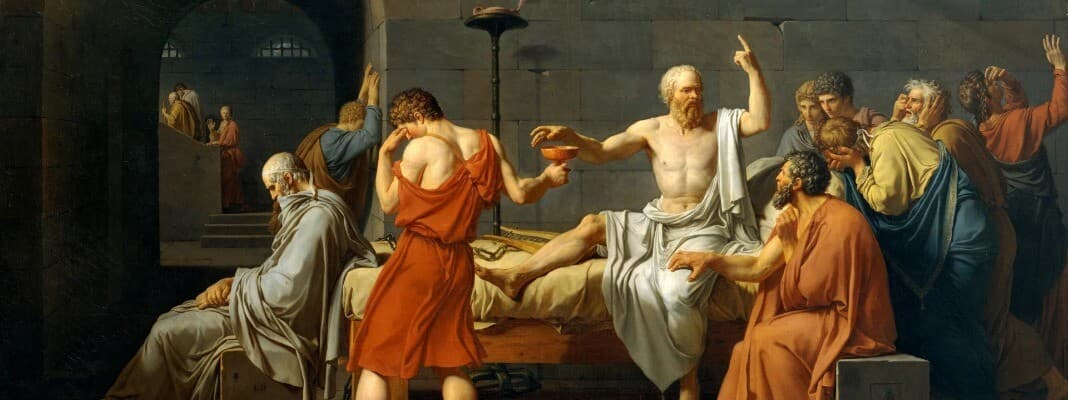
Philosophy can offer powerful consolation in situations that seem to degrade our meaning as humans, as it provides a revelation of what true happiness actually is. Boethius wrote ‘The consolation of philosophy’ in 524, and it follows a dialogue between Boethius, who is sitting in a prison cell awaiting his execution, and the personification of philosophy as a woman. At first glance, it is clear from the text that philosophy comes to our aid and consoles us in times of need (Boethius is in a cell awaiting his death). Importantly, Philosophy doesn’t console by offering meaningless sympathy, but instead by demonstrating that Boethius actually has no good reason to complain about his current situation. This is because, although Boethius is being sentenced to death, his true happiness remains undamaged. Philosophy then gives two reasons for this, both of which support the view that philosophy can offer consolation to what many humans fear: losing power and status.
The first reason begins with Philosophy, personified as a woman, distinguishing between the ‘ornamental goods’ of fortune, such as riches and status, which have limited value, and the ‘true goods’ – the virtues. Based on this differentiation, Philosophy argues that Boethius has not lost any true goods but has lost many ornamental goods in his fall from power. His loss of status and authority has not cut him off from true happiness, which is attained through a life based on “virtue, wisdom and sufficiency” (Boethius, 524 AD). Therefore, Philosophy offers the consolation that Boethius should not feel distressed by the disaster he has experienced since true happiness extends beyond the lesser objects of power and reputation. Translated into the modern world, many would see this as a powerful consolation because the desire to gain power and authority, combined with constant comparison to others, can often cause us to become lost in a self-defeating obsession with achievement and status. Now more than ever, with the impact of social media, we care more about what others think of the way we are than the way we actually are. As a result, it seems that philosophy can console us in a similar way, reminding us that true happiness results not from attaining power and prestige, but from living a life of true virtue. Similarly, the second reason that Philosophy offers for this consolation is that perfect good and perfect happiness are not merely in God but are God. Therefore, perfect happiness remains completely untouched by changes in earthly fortune. This offers some consolation to Boethius, who has become imprisoned and is being sentenced to death, but it also represents consolation to humanity as a whole by displaying true happiness as something that transcends earthly events and fortune. However, the reasoning that Philosophy gives fails to explain how the individual human (such as Boethius) is supposed to actually relate to the perfect happiness, which is God, and how they can ultimately achieve it. In response, Philosophy says that just by knowing God, who is the embodiment of perfect happiness, Boethius (who represents all of humanity) will himself be rendered truly happy. Therefore, Philosophy offers humanity clear consolation that perfect happiness can be found through knowing God. However, Boethius aims to allow true happiness to be reached through reason, not faith. As a result, faith is not required to know God, but instead rational reflection is needed to understand that all the ultimate goods in the world, including perfect happiness, exist in one perfect source which is God. Ultimately, Philosophy provides consolation in the notion that true happiness comes from aligning oneself with objective goodness, which is found in God.
Fundamentally, most humans fear death due to the uncertainty it brings. Many also view death as an objectively negative event, which must always be bad because it deprives us of future life. Philosophy allows us to question whether death is always a misfortune by adopting a version of preferentialism. Bernard Williams provides us with reasoning which allows philosophy to provide significant consolation for death. Williams distinguishes between conditional desires, which are desires we have in life when we don’t wish to keep living, and categorical desires, which are desires that give us real reason for wanting to live. Categorical desires give meaning to life, and so philosophy is able to console here in the sense that it provides us with an answer to a question that many humans debate: ‘what gives life meaning?’ Therefore, Williams states that mortality is a good thing because people, as they grow old, will eventually lose the categorical desires with which they identify, ultimately causing life to lose its true meaning and joy. However, many would argue that mortality is not always beneficial to us; death at a young age can occur unfairly and strip people of meaningful lives. Williams acknowledged himself that people have good reason to condemn premature death because it takes away our categorical desires too early. Alternatively, it could be argued that Williams’ preferential view does not give sufficient reason that philosophy can console on death. For many, death is scary because no one can know what the experience will truly be like. Nothing, not even philosophy, will be able to fix this problem. Some have faith, some don’t, but the overall fear-driving factor for humans is uncertainty. As a result, some may argue that philosophy can offer us consolation that death is not as bad as it may seem, but it can’t provide consolation in understanding what death is actually like, and so it is not able to rid us of our universal fear of the uncertainty that accompanies death.
Moreover, philosophy is able to console by demonstrating that it is possible that death need not be bad for humans if we prepare ourselves suitably for it. Many seek to rid themselves of the fear of death and, as a result, some may ask themselves whether we can abandon all desires that death might thwart or take away from us, so that we are not reduced by death when it happens. This process would involve us having to ‘thanatize’ our desires. Thanatization is a philosophical strategy which is designed to eliminate anxiety about death by altering one’s desires to be compatible with mortality. It involves abandoning long-term desires or goals that death might thwart, therefore ensuring that death cannot harm or deprive us in any way. This seems to be a clear consolation to the fear that death will reduce us. However, many would argue that death does not change us and that our spiritual essence lives on. Similarly, some may criticise that thanatization would also have clear negative impacts in the current world of living, as we would be unnaturally limited in our desires, causing our lives to lose meaning. We would have cut away all our categorical desires (as these, by definition, would be thwarted by death), and would only be left with conditional desires which cannot motivate us to live a meaningful life. Thanatization requires us to give up the view that life is worth living in order to be prepared for death. Many, however, would ask ‘is this worth it?’ Overall, philosophy is able to provide the grounds for consolation that we can prepare ourselves for death through thanatization and also have the means to a truly meaningful life through categorical desires. Philosophy also gives us the freedom to choose between these options, which is ultimately a consolation in itself.
Some may question whether philosophy actually provides any consolation, or whether it only removes meaning and exposes the uncomfortable and painful truths in our lives. The existentialist tradition fundamentally strips away the consolations that traditional philosophy seems to offer. Ancient philosophy places humans in a meaningful cosmic order, known as a cosmos, where they are told how to live and flourish. Existentialism dismantles this consoling framework entirely. Sartre said that “existence precedes essence” (Sartre, 1943), which harshly means that there is no human nature, nor predetermined purpose. Therefore, human beings are, in a sense, radically free. However, this freedom is not consoling. Instead, it means that we are fully responsible for who we are, without any tradition or God to blame or rely upon. Therefore, it becomes clear that philosophy does not offer any consolations here but instead tells us that we are “condemned to be free” (Sartre, 1943). This is because we are not born with a purpose, so we are burdened with having to create one for ourselves. Some would argue that this view removes the consolation that philosophy provides us with meaning in life and instead shows how philosophy leaves us with burdens to carry. Others would take a more libertarian view and argue that having the freedom to develop our own purpose can only be a blessing. Furthermore, Søren Kierkegaard argues that traditional philosophy offers consolation by demonstrating that a meaningful life is achieved when an individual “raises themselves to the universal” (Kierkegaard, 1843), meaning they bring their immediate personal desires under the rational, moral law. This provides consolation because it offers a clear path for how we can go about making our lives meaningful. In ‘Fear and Trembling’ Kierkegaard uses the biblical story of Abraham’s near sacrifice of Isaac to convey the paradox that “the single individual is higher than the universal” (Kierkegaard, 1843). This claim contradicts the philosophical consolation that true meaning in life comes from conforming to what is universally rational, and not what merely satisfies individual desires and impulses. In the example of Abraham, killing your own son is clearly a deeply evil act and is wrong in every universal moral standard. However, Kierkegaard points out that Abraham consciously chooses to disobey ethics entirely in order to be obedient to God. Some would just see this as a demonstration of true faith, as it is meant to be interpreted in the Bible. Others, such as Kierkegaard, would say Abraham’s actions represent “the teleological suspension of the ethical” (Kierkegaard, 1843), meaning that a relationship with God is put above the universal ethical standard. Therefore, it can be said that philosophy does not console because we have to bear the burden of our own singularity and confront the unsettling truths alone.
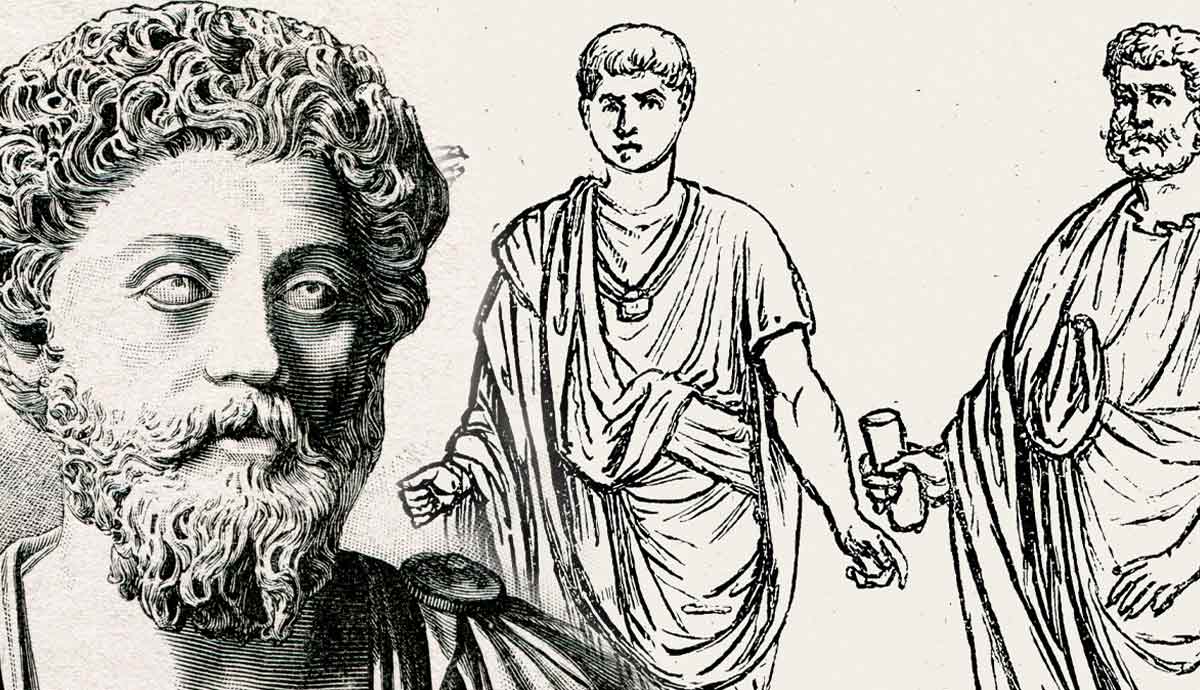
Epictetus opens the ‘Enchiridion’ with the statement that “some things are in our control and others not”. This line embodies the Stoic tradition: we should only focus on what we can control. The Stoics believed that philosophy functioned as a practical guide on how to live in order to achieve true peace of mind (ataraxia) and flourishing (eudaimonia). Seneca said that “It is not that we have a short time to live, but that we waste a lot of it”. This ideology allows philosophy to reframe mortality as a reminder to live life to the fullest, rather than being a source of dread about inevitable death. Both the Stoics and Epicureans argued that death is simply non-existence which is the same state that we were in before birth, which caused us no distress then. As a result, death should not worry us because we will not be existing when death is present. Epicurus makes this consolation clear: “Death is nothing to us, for when we exist, death is not yet present, and when death is present, then we do not exist.” Furthermore, it could be argued that the Stoic framework simply reduces the things we need to worry about in life, therefore offering consolation that we only need to focus on what is “up to us” (Epictetus, 125 AD), and that which helps us to live our lives to the fullest.
Although different forms of philosophical thinking console at different levels, philosophy as a whole offers consolation as it allows us to grapple with the questions that really matter to us. Without this, humans would live afraid because we often fear what we can’t understand.
About the Author
Eddy Thom
Year 12 Student currently studying Maths, Economics, Philosophy and Spanish at A-Level. Aspiring to study PPE at university.