Epistemology
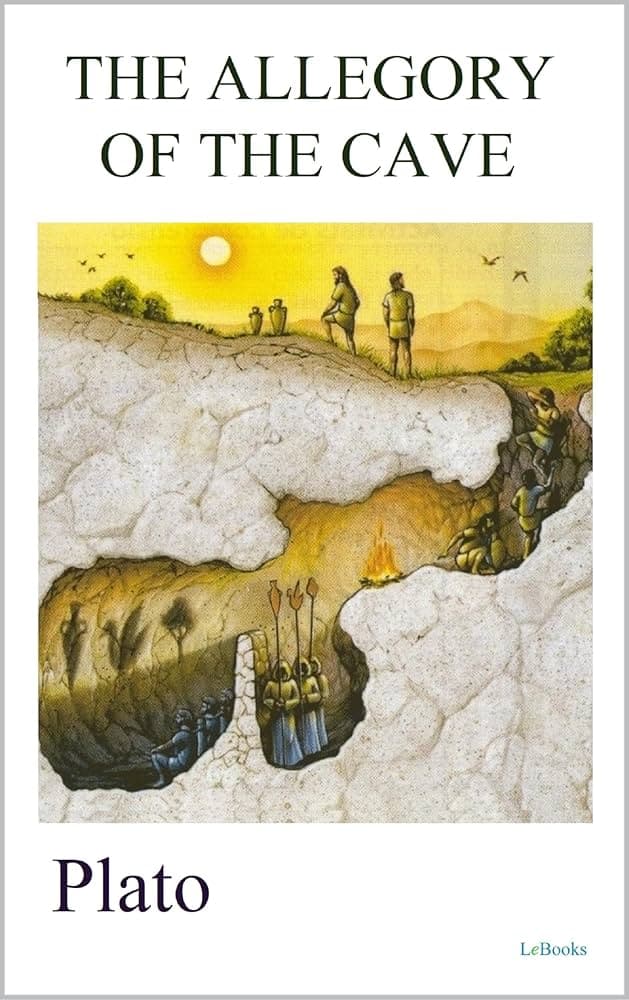
Two and a half millennia before the algorithm, Plato described a group of people who mistook shadows for reality and punished the one among them who escaped into the light. The resemblance to contemporary digital life is not coincidental — it is philosophically precise.
Imagine prisoners chained in a cave since birth, able to see only the wall in front of them. Behind them burns a fire, and between the fire and the prisoners, puppeteers carry objects whose shadows dance on the cave wall. The prisoners, having never known anything else, take these shadows for reality. They name the shadows, develop expertise in predicting their sequence, and regard the most accomplished shadow-reader among them as wise.
This is, of course, the allegory of the cave from Plato's *Republic*, and it has survived twenty-five centuries because it captures something enduringly true about the human propensity to mistake representation for substance. What Plato could not have foreseen was that we would one day construct a cave of extraordinary technical sophistication — and voluntarily climb inside it.
The Architecture of the Algorithm
The contemporary social media feed is not a transparent window onto the world. It is a curated sequence, optimised not for truth but for engagement, shaped by feedback loops that learn which shadows you stare at longest and serve you more of them. The mechanism is not identical to Plato's cave — the puppeteers here are not malevolent but merely indifferent, and the chains are not physical but habitual — yet the epistemic structure is recognisably the same.
Consider how we form political beliefs in the attention economy. Research consistently shows that exposure to homogeneous information environments increases confidence in those views while reducing exposure to disconfirming evidence. We become better and better at reading *our* shadows while losing the very concept of a sun.
The Philosopher and the Ratio
In Plato's allegory, the philosopher is the prisoner who escapes. He climbs out of the cave, is blinded and disoriented by the sun, and eventually comes to see the world as it is. When he returns to the cave to help the others, they mock him. His eyes, unaccustomed to the darkness, make him worse at reading shadows than he was before. The other prisoners, Plato notes, would kill him if they could.
The philosopher's return maps uncomfortably well onto the experience of publicly challenging consensus online. Epistemic bravery — the willingness to share a view that contradicts the dominant narrative of one's own community — is algorithmically punished. The ratio is the modern cave's form of exile.
A Socratic Response
The solution Plato proposes is not individual willpower but structured education: a *paideia* that systematically draws the soul toward the good by cultivating the habit of questioning appearances. Transposed to the present, this suggests that the remedy for algorithmic epistemology is not merely media literacy tips but something more fundamental — a reform of the conditions under which we come to hold beliefs.
This is not a counsel of despair. Plato was not naive about the difficulty of the ascent from the cave; he wrote an entire dialogue about it. But he insisted the ascent was possible, that the capacity for philosophical reflection was not the privilege of the few but the latent potential of everyone who could be educated to use it.
Whether our institutions — schools, platforms, regulators — are up to the task of providing that education in the age of the algorithm is the most urgent epistemic question of our time. Plato posed it. We have to answer it.
About the Author
Amara Osei
Amara Osei studies Philosophy, English Literature, and Sociology at King Edward VI College. She is the founder of her school's Philosophy Society and plans to read Philosophy at university.